Understanding Cats
Cats are often very misunderstood animals with a lot of hateful myths about them in the past that continue to affect them even today. Sometimes, we can do something for them that we think is good but actually has the opposite effect. Here are some things that can help you and cats for the better.
Sterilisation Of Cats
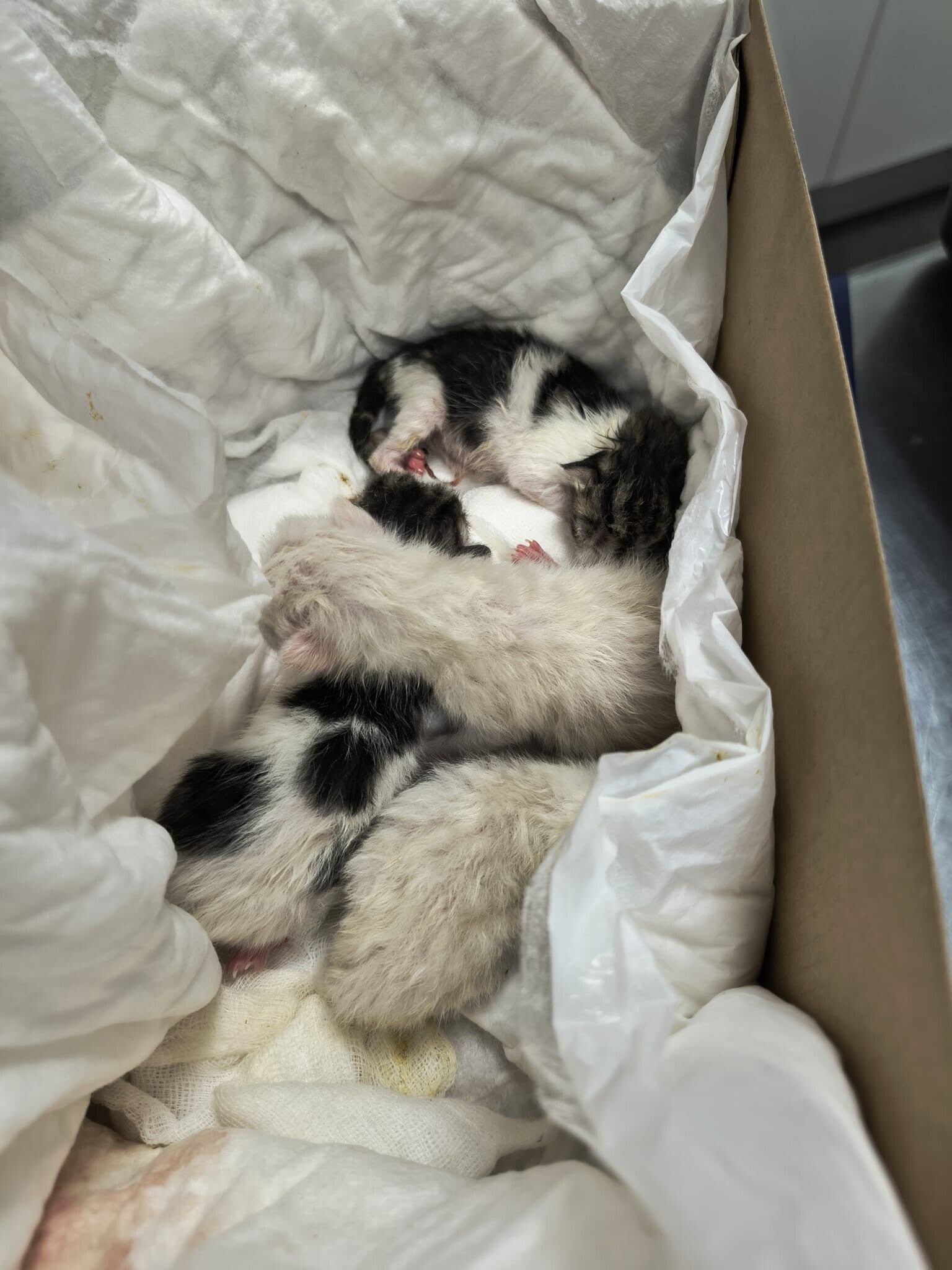
Why It Is Important To Sterilise Cats
It is now law to sterilize your pets and for the Ayuntamiento to pay to sterilize street cats. Below are the reasons why and the benefits of doing so.
Sterilisation of both male and female cats at a young age (5-6 months old) is important for different reasons.
Cats can be sterilized safely from 8 weeks old but it is much better to wait until they are bigger as it decreases the risks from anesthesia during surgery. 5-6 months is the recommended age for sterilization as this is the age they hit sexual maturity and can start mating.
There are many benefits to sterilizing cats and no downsides. As pet owners we have to be responsible for our cats' health as they are unable to advocate for themselves.
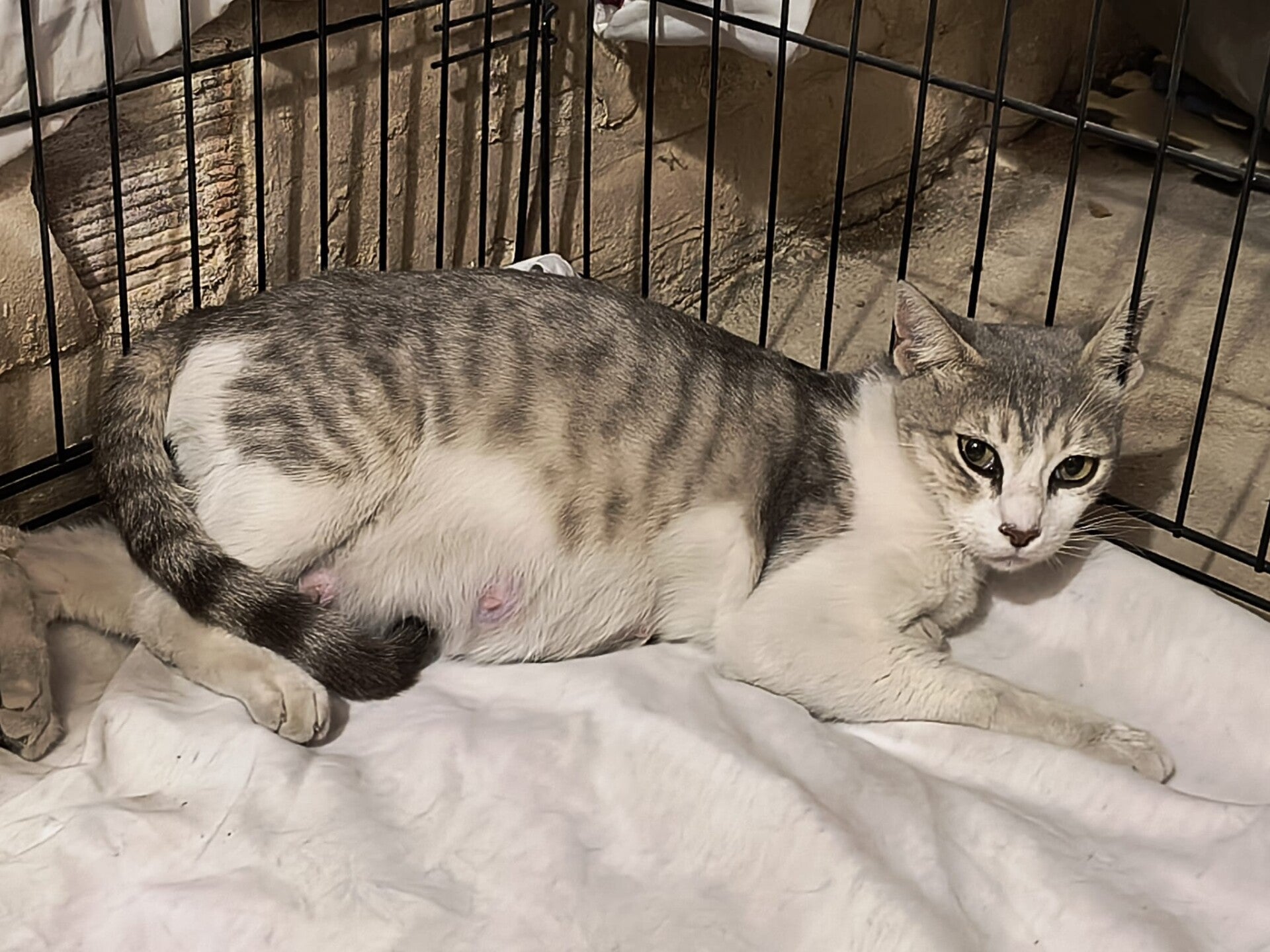
Female Cat Sterilisation Benefits
- She won't go through the torture of a heat cycle. If a female cat isn't mated in her heat cycle it will continue to return every few weeks through the year, the urges getting stronger with every cycle. If you have ever seen this happen you will know it is absolute torture for her with no relief.
- It eliminates the risk of unwanted litters and the abandonment of those unwanted babies.
- It eliminates the risk of the mother struggling and risking hers and the babies lives during labour.
- It eliminates the risk of ovarian and uterine cancer and drastically refuses the risk of mammary cancer.
- Eliminates the risk of pyometra, a potentially fatal uterine infection.
- Increases the cat's life expectancy by 3-5 years.
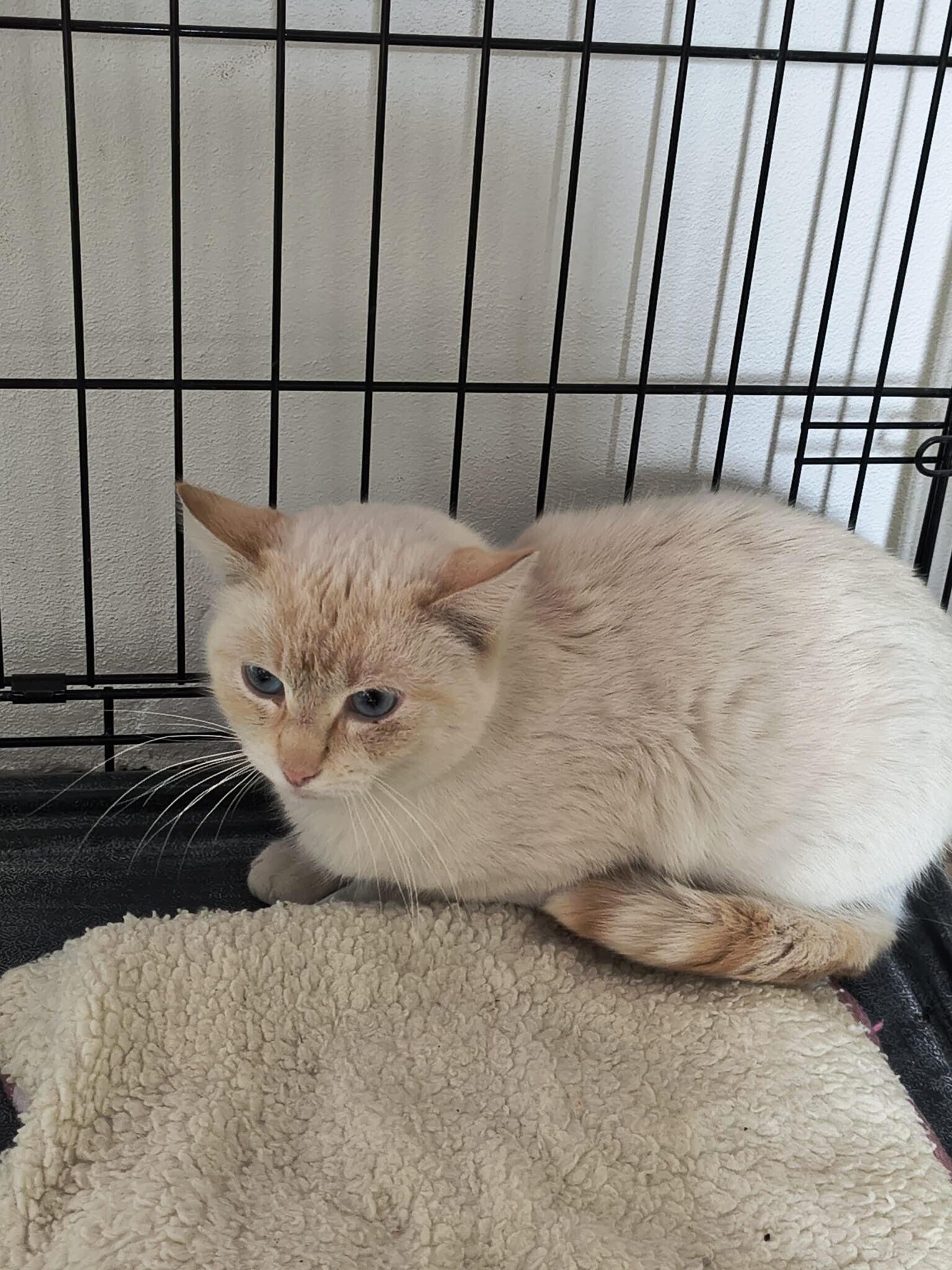
Male Cat Sterilisation Benefits
- Eliminates the urge to find a female. Males will travel miles away from their home to find a female in heat. This is how so many get lost.
- Sterilizing them reduces the urge to escape and wander great distances.
- Eliminates the urge to fight every other male over females. Which reduces the risk of injury and deadly infections caused by fighting.
- It makes the urge to spray to mark their territory rare and lessens the smell of their urine.
- Reduces the risk of testicular cancer, prostate issues and other infections that can spread through fighting and mating.
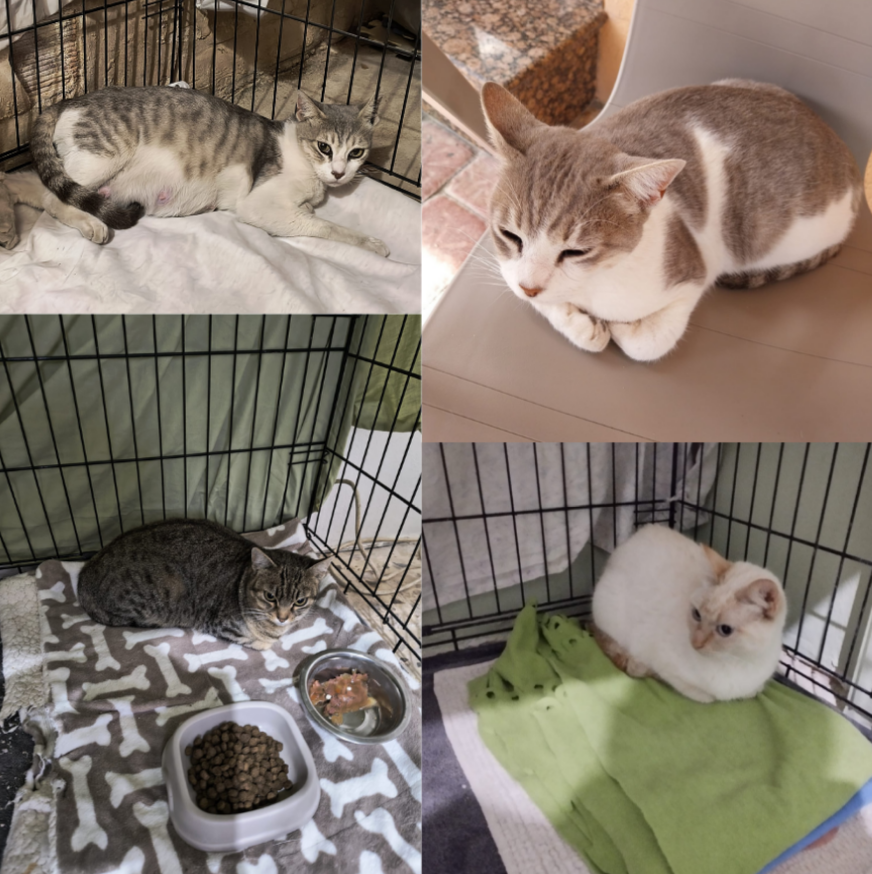
Street Cat Sterilisation Benefits
All the risks an unsterilised cat has are much higher for street cats, and it is vital we sterilize as many as possible. That is why it is the law that every Ayuntamiento in Spain is responsible for paying for trap neuter release (TNR). Every town has or should have their own way of doing it. In our town only a legally registered association like ours are allowed to capture street cats and take them to be sterilized.
It is vital for the health of the cats both male and female, that we do this. If we don't do it the cat
population very quickly gets out of control and diseases spread.
- Female cats can have 4-6 litters a year and around 30 babies a year.
- A male cat can impregnate multiple females a day fathering hundreds of babies per year.
- The constant contact with other cats spreads deadly diseases and infections (see our cat
diseases and infections section) rapidly across colonies across vast areas.
The Importance Of Cat Colonies
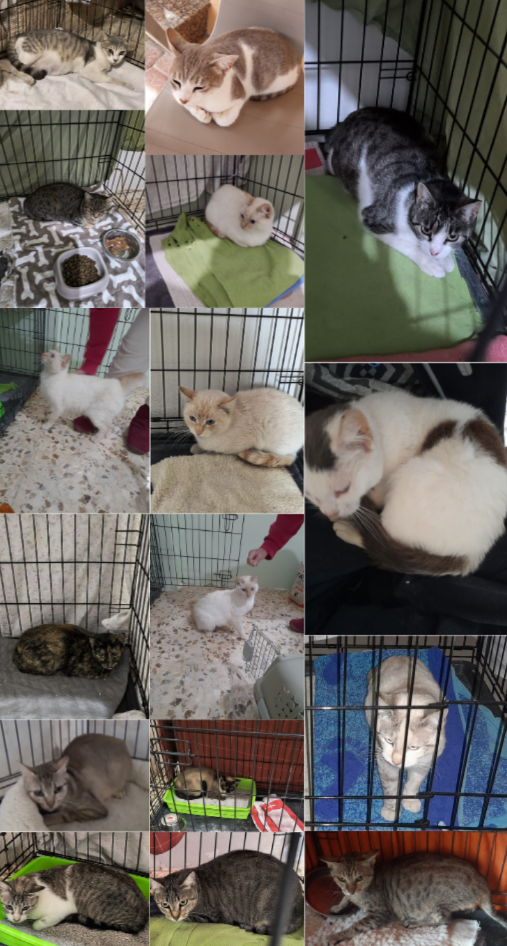
Cat Colonies Are Vital For Many Reasons.
- There are the benefits of keeping rodents to a minimum in the area. This reduces the risk of
disease and illness caused from rodent pee and feces and less need to have rodent poison and
traps everywhere. - The caretakers keep the area where they feed the cats clean and tidy, this also reduces the pests/rodents in the area.
- The cats are taken care of by the caretaker this includes feeding,TNR, medical care and deparasitation. Keeping the cats in good health is vital as it prevents the spread of deadly and lifelong diseases and the spread of parasites.
- The caretakers know all their cats well and they know their behaviour. So they are able to see quickly if there are any changes in their health and can seek immediate medical attention.
- The caretakers are able to see which cats would be suitable to find a home for and which wouldn't allow humans anywhere close to them.
- It is illegal for anyone to remove or harm any street cats. To do so carries a fine of up to €200.000.
- Only the colony caretaker has the legal right to remove cats from their colony and only for the purpose of medical care or if they have found a suitable home.
Vaccinations And Microchips
The Importance Of Pet Vaccination
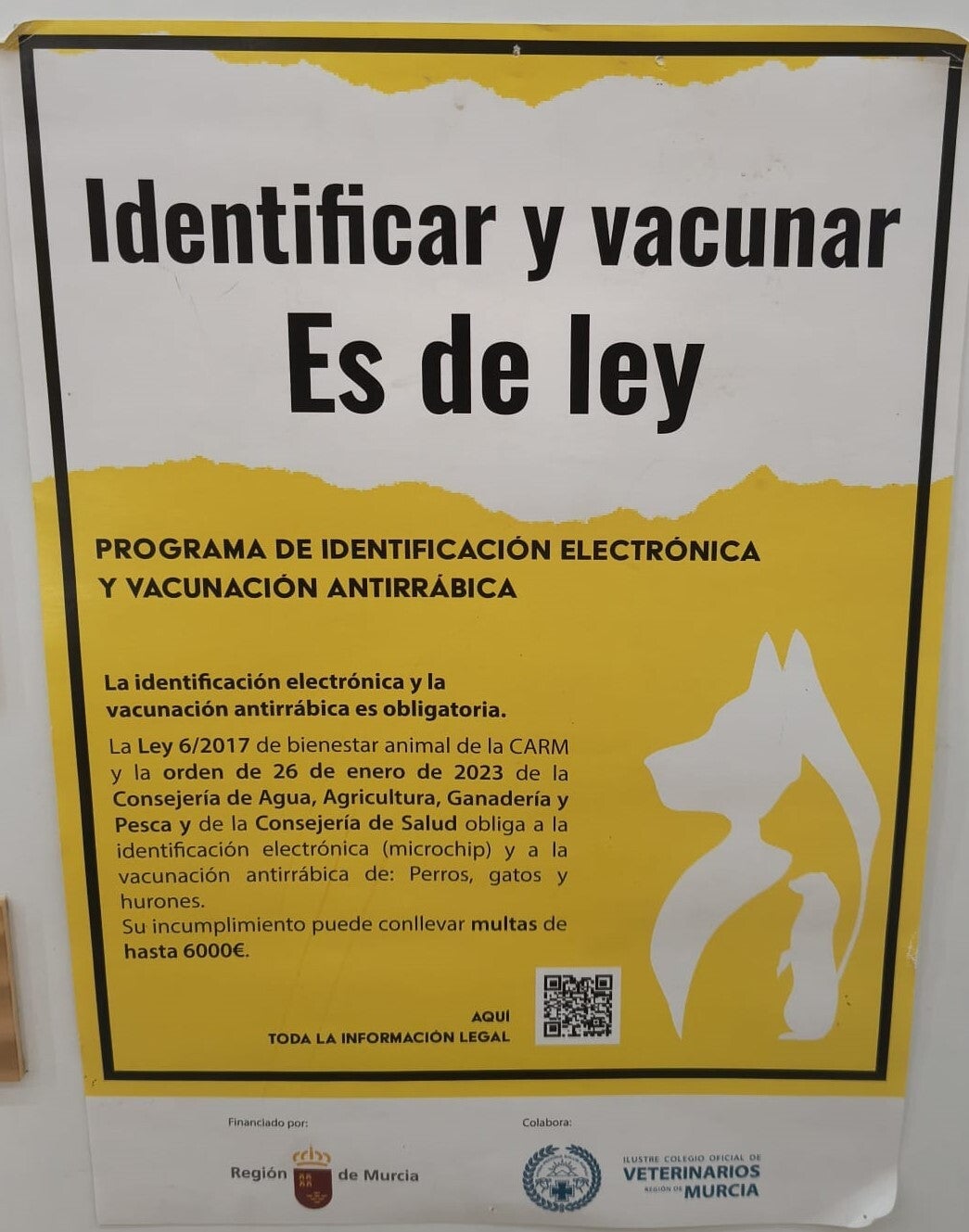
It is now law to vaccinate all pets. These laws are in place solely for the health of the animals.
The law is designed to protect animals from these horrendous illnesses. The way vaccines work is the more animals that are vaccinated the more protected the population is. With an eventual goal of the diseases no longer being present at all just like polio or TB in humans where countries who vaccinate no longer worry about those diseases because mass vaccination eradicated them. Below is a list of diseases that can be and usually are vaccinated against with the trivalent vaccinations. These are the 3 most common vaccines and they are very effective. If your pet is unlucky enough to be one of the small percentage that still manages to contract the illness, the effects will be far less severe than if they hadn't had the vaccine. The first
vaccination is done over 2 doses with a booster shot every year. Below is also a guide of what
to look out for in your pets health.
There are many diseases that our pets can contract but many of them are easily prevented by simply vaccinating your pet. We will cover some of the most common and easily contracted diseases. Some of these diseases once contracted can kill your pet in days, others can never be cured only managed with medicine. But all are preventable or lessen the risk of them contracting the disease if you vaccinate them.
The Importance Of Pet Identification
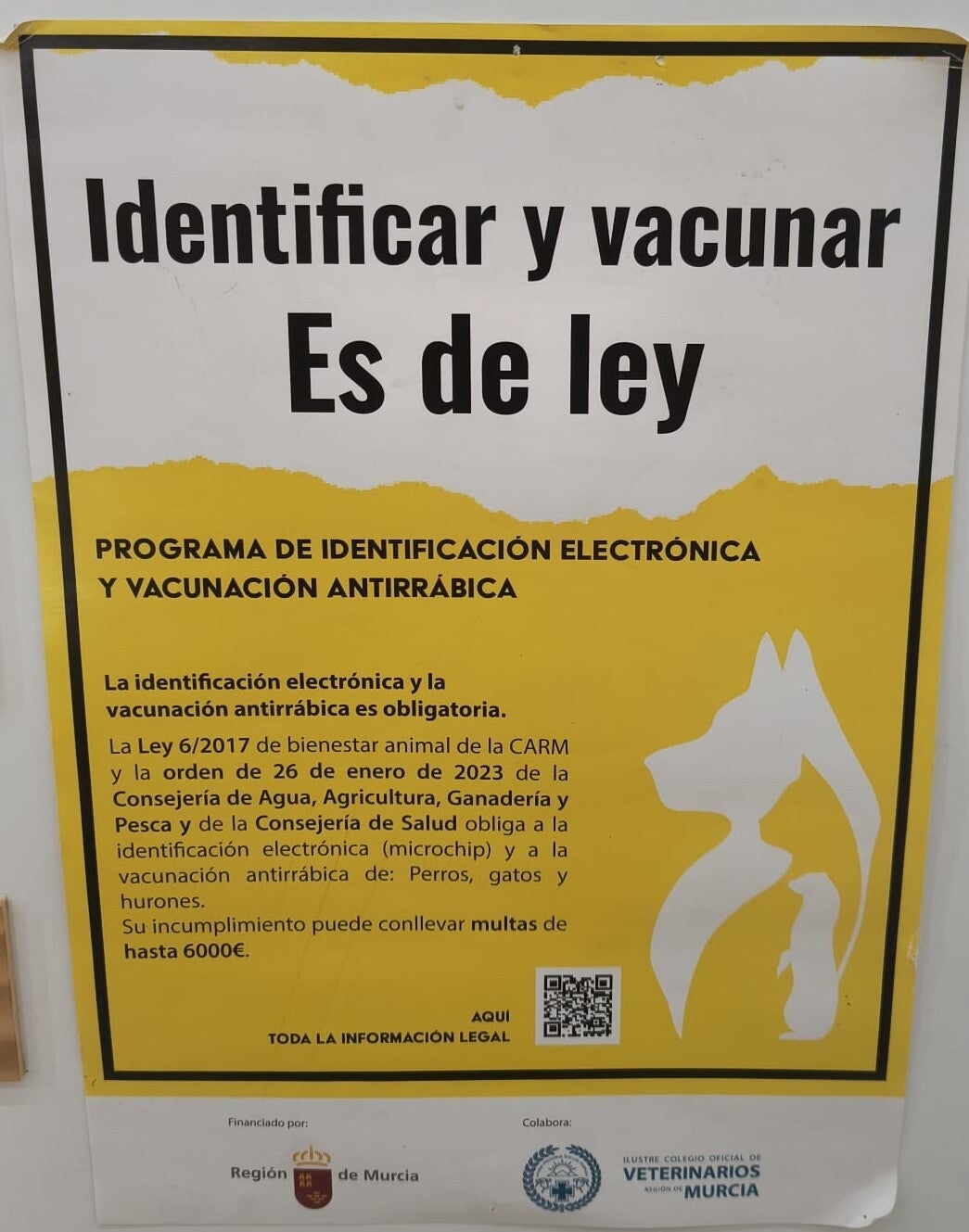
It is the law to get your pets chipped in case your cat goes missing or is stolen and for travelling.
The law in Spain changed in 2023 so all pets now have to have a microchip and be registered on a national database.
Microchipping promotes responsible ownership. It is designed to help combat animal abandonment.
Here Spain has one of the highest rates of animal abandonment problems across all of Europe and the law on microchipping is a way of tracking owners and being able to enforce the law against those who do cruelly abandon their pets.
Microchipping is crucial to reuniting lost or stolen pets with their owner. The chip is the proof of ownership.
Microchipping is also helpful to keep track of vaccinations of animals, especially rabies.
If you fail to microchip your pets you risk being fined up to €30.000.
It is now EU law that all animals must be microchipped and placed on an international database when travelling to combat illegal pet trade and animal trafficking.
The Effects Of Human Festivities
The Traumatic Effects Of Fireworks And Festivity Noises On Animals

Fireworks are extremely traumatic for animals' wellbeing. Unlike humans they do not know what
is happening around them (though many humans are also frightened for numerous reasons as well) and they are terrified of the noise caused by fireworks which continue to get louder and louder. So even being inside the home animals do not feel safe as they are now so loud it shakes the home and rattles the windows.
Fireworks can cause animals to panic and try to flee out of fear and can cause them injury if in the home and if outside they will run far and fast and won't stop until they can no longer hear the bombs going off. They can be several kilometres away from their home/safe place before they can no longer hear the noise and by this time they are lost and now scared for another reason.
They will then become even more lost whilst trying to find their way to their home/safe place. This is also a time when they will be run over by vehicles, in their panic running into roads and
other dangerous situations.
Loud fireworks in Spain cause significant trauma to animals, resulting in panicked escapes, severe injuries, and death. Studies indicate high stress, with 80% of dog owners reporting behavioural changes. Studies in Spain show decreased sparrow populations due to breeding disruptions.
While precise, comprehensive nationwide statistics on the exact number of cats killed or injured by fireworks in Spain are not officially tracked, animal welfare organizations report that thousands of animals suffer from shock, injuries, or death due to firework-induced panic every year.
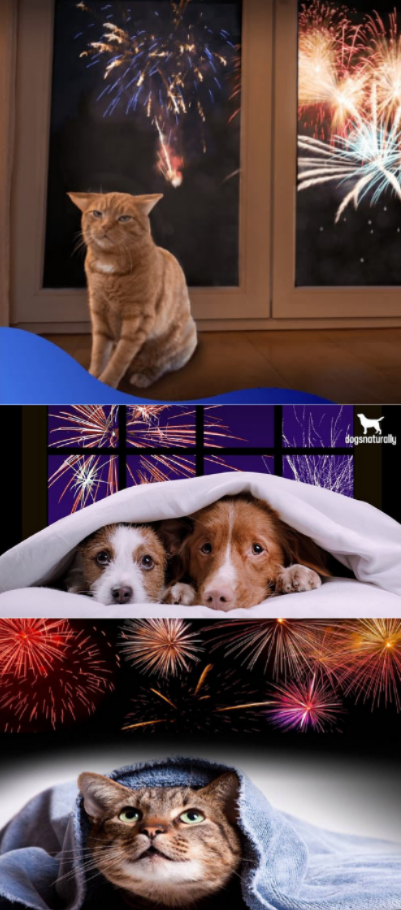
The Effects Of Fireworks On Pets
- Panic and Injuries: Fireworks cause extreme stress, leading pets to panic, resulting in injuries
from escaping, running into traffic, or attempting to break through windows/fences. 31% of dogs show shivering/trembling, and roughly 13% attempt to run away. Fireworks are responsible for approximately one-fifth of all reported companion animal disappearances. - Heart Failure and Shock: Many cats and dogs suffer from severe, fatal stress, including pets suffering from panic-induced heart attacks, self-injury (breaking teeth, clawing walls), and being hit by cars during escapes.
- Behavioral Effects: While dogs often show more immediate signs of distress, studies indicate that firework aversion causes significant long term stress and behavioral issues (like increased fear and loss of appetite) in cats, with up to 16.5% of cat owners noting lasting effects. While dogs are often considered more affected, cats are highly susceptible to hiding and panic-induced accidents. According to the RSPCA, thousands of animals suffer from injuries or death annually due to firework-related panic.
- Missing Pets: The Kennel Club reported a doubling of missing dog reports around firework-heavy periods.
Personal Experience Of Animals Being Harmed By Fireworks
We know from personal experience the dangers of fireworks and pets.
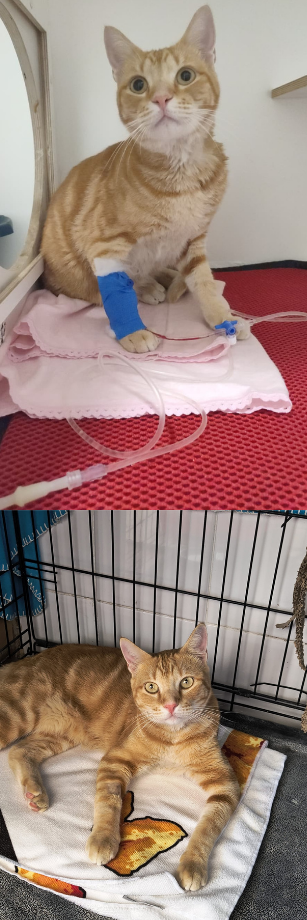
In September 2025, the fiestas kicked off as normal in our village. Every day for a week, there were fireworks, day and night. All of our animals are constantly scared the entire time. They couldn't go into the garden and relax because there was no way to know when the fireworks were going to be set off, and there is also the general public who feel the need to set of their own when they feel like it. One night, with a particularly large display, the fireworks seemed to get louder and louder. Our house literally shook and the glass in the windows rattled so much I thought they would break. My biggest cat, Gingy, was sleeping on the sofa with me, believing he was safe. Until the bomb went off. He was so scared, he tried to run further into the house. I was sitting on the other end of the sofa, between him and the door to his escape. His 7.5 kg body hit me at full speed. His head hit mine and split my eye open. I required stitches for the cut and had concussion for a week. Gingy was hurt worse than me. He required a stay in the vet because the collision had been so powerful his spine was damaged, and he couldn't walk, he also had a terrible concussion. Gingy had to be on medication for a month and had to stay in a cage to limit his movements. It took months for him to be anywhere near normal and start to jump again.
Sadly this isn't a rare occurrence, every time there are fireworks animals are injured or worse, and when humans insist on making them bigger and louder each year, these events become more common and more severe.

The Effects Of Fireworks On Wildlife And Farms
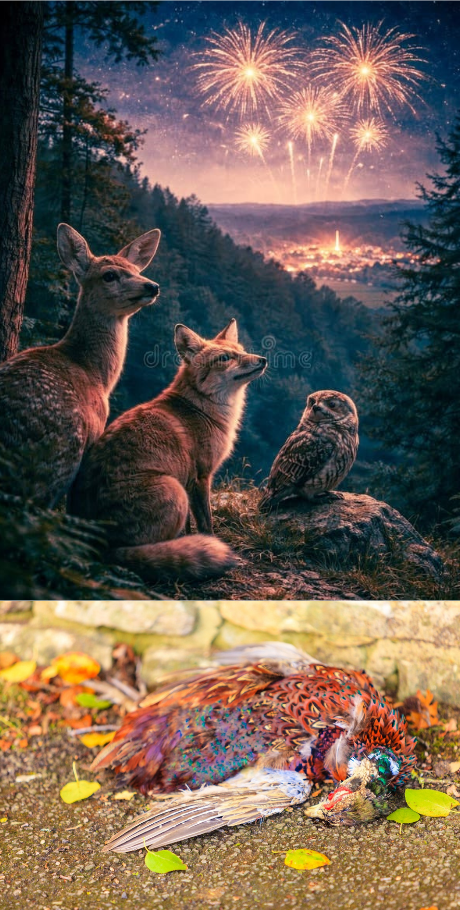
- Wildlife: Studies by the University of Alicante and Valencia found that firework noise in Spain causes juvenile sparrow populations to drop because adults abandon nests. Birds are often forced out of their nests at night, causing disorientation, mass deaths, and abandonment of young. Birds who are disoriented often collide with structures in panic, with documented cases of mass deaths (e.g., thousands of blackbirds in Arkansas, 2010).
- Farm/Stable Animals: AnimaNaturalis reports that 79% of horses show anxiety due to fireworks, and 26% suffer direct injuries. 1,468 incidents involving horses and fireworks were recorded between November 2010 and March 2024, averaging over 100 per year. From that, 49 horse fatalities and 317 injuries were recorded, including lacerations, broken limbs, and injuries from breaking through fences. Nearly 80% of horses were reported to be anxious or very anxious during fireworks. Livestock often experience acute stress, with reports of laying hens showing lower egg production and egg malformations after fireworks.
- Wildlife Casualties:
Deer/Wildlife: Documented cases include wild animals like deer sustaining serious injuries from
running into fences or roads.
But due to the lack of a standardized reporting system, many cases of animal suffering go
unreported, making it difficult to establish an exact, yearly numerical figure.
Cases Of Fireworks Harming Animals And Studies
Specific Incidents: Reports indicate intentional, severe cruelty cases where firecrackers are
placed in the mouths of cats, causing brutal injuries or death, such as cases documented in
Lleida (2022) and Almendralejo (2018).

Animal Friendly Firework Options
Animal-friendly firework options focus on reducing noise and light pollution to minimize stress on pets and wildlife.
Top choices include low-noise/silent fireworks, drone light shows, laser displays. These alternatives provide festive visuals without the sudden, intense booms that cause fear and disorientation in animals.
Drone Light Shows: These use synchronized drones to create vibrant aerial visuals, offering a high-tech, completely silent alternative.
Laser Displays & Projectors: Laser shows set to music and home projectors can create exciting light effects without any noise or smoke.
Foods And Household Toxins
Have you ever refrained from giving your cat something due to fear of it being toxic to them? Here, you can find some foods and household items that are normal to us but toxic or unhealthy for cats as well as some safe alternatives to use.
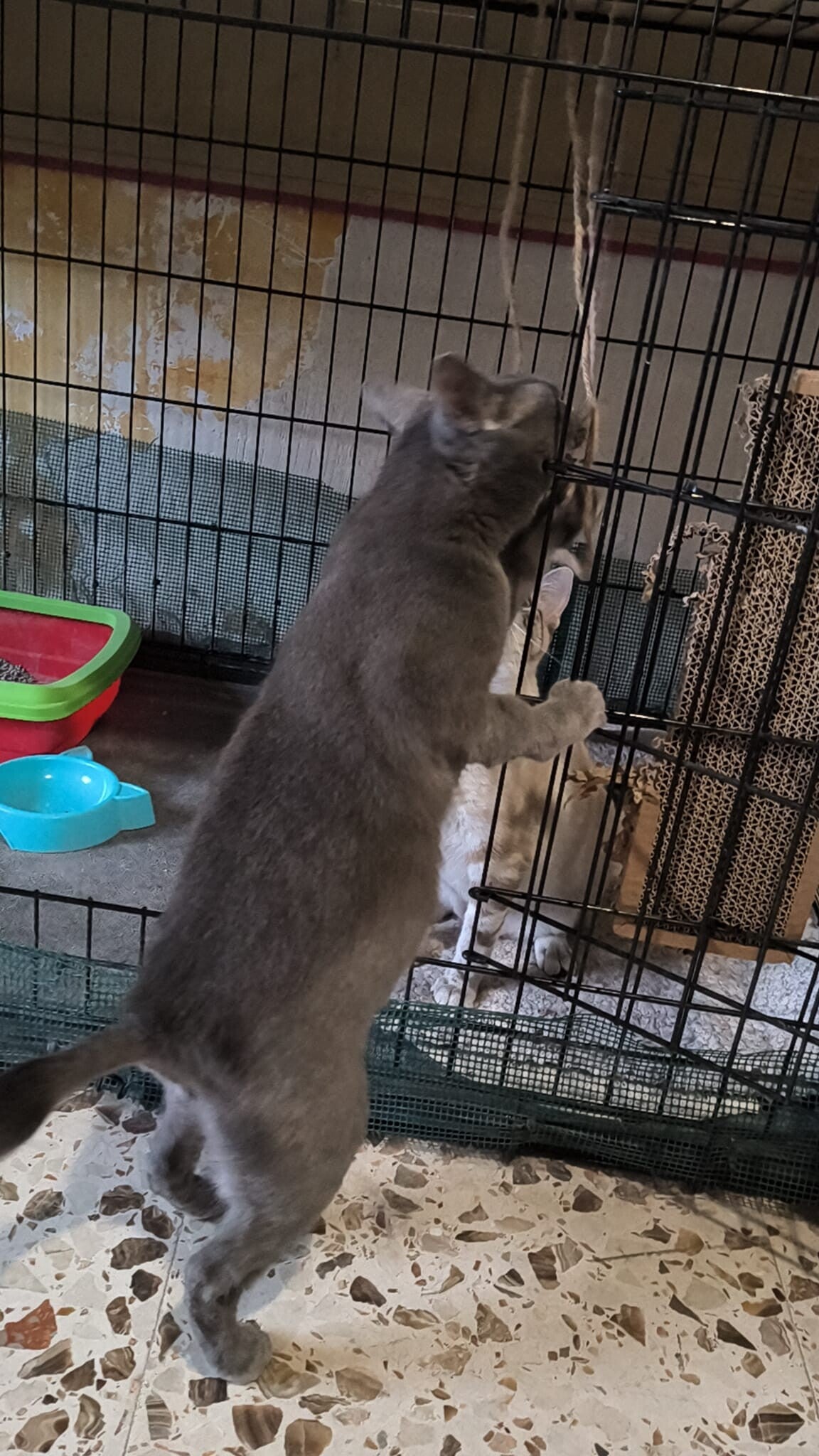
We all know how much our beloved cats are curious and love to explore (as pictured with Sheba exploring a new toy). One of the ways they do this is by eating things around the house. They usually don't know by themselves what is and isn't toxic/poisonous to them.
One clear example of this is bleach. Bleach is a dangerous, toxic substance that (usually) contains ammonia, which is something that cat pee also has high levels of. Cats can get very close to bleach while smelling it in the same way they would if another cat had urinated. This is why it is so important to keep cleaning chemicals locked away from the reach of cats, other animals, and children.
But there are some things that are toxic to cats that are far less obvious, from human foods to indoor plants, here is a list of items, their effects, and what signs to look out for if a cat has ingested any.

Items Around The House That Are Labelled As Toxic
There are some things around the house that are naturally toxic, even to us. They are labelled as toxic, too. But sometimes, we leave them out on our cabinets or on the bathroom floor because we assume our cats are not interested. Unfortunately, some of these things attract cats with shiny packets, smells, or simply by being something new.
Here are some of the most common things that can harm cats:
Medicines:
Painkillers, cold medicines, vitamins, and diet pills are all potentially lethal to cats, even in small doses. That being said, any medication of any dose could be dangerous for them if not prescribed by a vet. Human medications are typically in much higher doses than a cat would ever be given.
Household Items:
- Coins. Coins contain zinc, which can harm cats.
- Essential Oils and Cationic Detergents. These can be found in Potpourri, automatic dish detergents, personal care products (hair sprays, body lotions, etc), home fragrances (aromatic diffusers, candles, incense, etc), etc.
- Batteries. Batteries contain acids and alkali, which can cause corrosive lesions.
- Cigarettes. Cigarettes and their smoke are toxic for any living being, so cats are included in that demographic.
- Cleaning agents, pesticides, paints, and varnishes all include toxins, some of which require no more than inhalation.
- Microbial and antifungal gents, which are most commonly found in air conditioners, air ducts, filters, and humidifiers.
- Plant Fertilisers, Herbicides, And Pesticides found in some gardens and garages.
- Baits and Traps for pests, such as rats, mice, ants, cockroaches, snails, slugs, etc.
- Car Products (petrol, oil, antifreeze, etc).

Human Foods That Are Toxic To Cats
We all love to treat our pets to a little bit of our own food every now and then. But what is actually safe to give them? Here, we will give a list of foods that are toxic to cats. Some of these can be dangerous within minutes, while some can have lasting effects, delayed effects, or need high quantities or repeated exposure to have effects (which does NOT make them safe "on occasion").
- Coffee Grounds and Beans.
- Alcoholic Drinks.
- Chocolate. Chocolate is toxic for any animal except for humans. Vets have been saying this for decades.
- Grapes and Raisins. Highly Toxic. If even one is ingested, symptoms will appear between 6 and 24 hours. It is recommended to take cats to the vet immediately as they cause rapid kidney failure.
- Garlic and Onions. Anything from this family (Allium) causes anaemia and organ failure in cats. Symptoms can include vomiting/diarrhoea, lethargy/weakness, pale gums (from anaemia), red or brown urine, and difficulty/altered breathing.
- Green Tomato.
- Raw Potato.
- Milk. The majority of cats become lactose intolerant in adulthood. Cow and plant-based (soy, almond, etc) milks are not safe for cats. Goat's milk has lower lactose levels but higher fat levels. Lactose-Free and commercial cat milk are safe options. Lactose can make a cat have diarrhoea, gas, and discomfort. It usually passes, but if symptoms persist, talk to a vet.

Household Plants Toxic To Cats
Some plants are very tempting to keep in the house or the garden, but which are actually safe for cats? Cut flowers and plants can be toxic to cats, so we will help with lists of toxic plants and safe plants.
Some signs of plant poisoning may include: salivation, vomiting, diarrhoea, twitching, fitting, breathing difficulties, collapse, and coma. These symptoms may vary depending on which plant the cat has been exposed to. Most of these plants are toxic when ingested, but some can have effects from proximity alone.
- Aloe Vera.
- Autumn Crocus.
- Narcissus (daffodil family).
- Lilies (all subspecies of lilies are toxic).
- Elephant Ears.
- Ivy (all subspecies).
- Foxglove (also toxic to humans, even via touch).
- Geranium.
- Oleander (also toxic to humans through ingestion and improper handling).
- Primrose.
- Rhododendron (also toxic to humans if ingested).
- Tomato plant.
- Yew trees (also toxic to humans).
- Amaryllis (also toxic to humans if ingested).
- Azalea (also toxic to humans if ingested).
- Bird Of Paradise.
- Clematis (can be toxic to humans if touched while it has broken leaves, stems, etc).
- Cyclamen (also toxic to humans).
- Eucalyptus (certain parts of the plant can also be toxic to humans).
- Indian Rubber Plant (sap is toxic to humans and animals through both ingestion and touch).
- Mistletoe.
- Nightshade (nightshade is extremely toxic to humans and animals with subspecies including belladonna and mandrake. Others are not toxic to humans, including the pepper family, tomatoes, etc).
- Poinsettia (primary cause of the condition known as "Christmas Poisoning". While it's toxicity is low, it is not recommended to have near pets).
- Swiss Cheese Plant.
- Weeping Fig (sap is also toxic to humans through ingestion and touch).

Sobre nosotros
Todo comenzó con una idea sencilla impulsada por una profunda pasión. Como pequeña empresa, nos enorgullecemos de la atención personalizada y la dedicación a cada detalle. Nuestro enfoque se basa en la calidad y la integridad, garantizando que todo lo que hacemos refleje nuestro compromiso con la excelencia.